The Twelve Healers and Other Remedies by Edward Bach
A Living Lineage of Vibrational Medicine
When vibrational plant medicine is first encountered, it can sometimes be met with skepticism. Yet this form of healing is not new, nor is it fringe. For almost a century, flower essences have been quietly supporting emotional and energetic wellbeing – available over the counter, trusted by generations, and rooted in a deep understanding of the human emotional landscape.
Dr Edward Bach was a pioneer of this subtle medicine. His book The Twelve Healers and Other Remedies, first published in Kent, England in 1933, stands as one of the foundational texts of modern vibrational healing. Approaching its 100-year anniversary, the work remains strikingly relevant today. Bach’s insight was simple yet profound: that emotional disharmony lies at the heart of many human struggles, and that nature provides gentle, intelligent remedies to help restore inner balance.
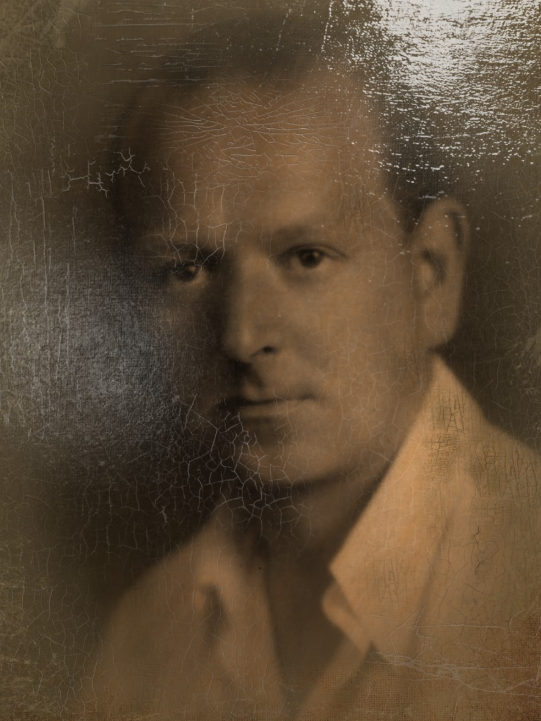
Who Was Dr Edward Bach?
Dr Edward Bach (1886–1936) was a British physician, bacteriologist, homeopath, and spiritual pioneer best known as the founder of the Bach Flower Remedies system.
Trained in conventional medicine in London, Bach was highly respected in his early career. He worked as a bacteriologist at University College Hospital and the London Homeopathic Hospital, where his research into gut bacteria (later known as the Bach Nosodes) earned him professional recognition.
Yet despite this success, Bach became increasingly dissatisfied with a medical model that focused solely on physical symptoms while overlooking the emotional and spiritual roots of illness.

Bach observed that patients with the same diagnosis often healed – or failed to heal – very differently. This led him to a profound insight: a person’s emotional state and inner conflict play a decisive role in health and disease. From this understanding, he gradually stepped away from laboratory work and urban medical practice, choosing instead to work directly with nature.
Between the late 1920s and early 1930s, Bach developed what would become his life’s work: a system of 38 flower remedies, each corresponding to a specific emotional or mental state such as fear, uncertainty, grief, impatience, or despair. He believed that these remedies worked not through chemistry, but through vibrational resonance, helping to restore harmony between personality and soul.
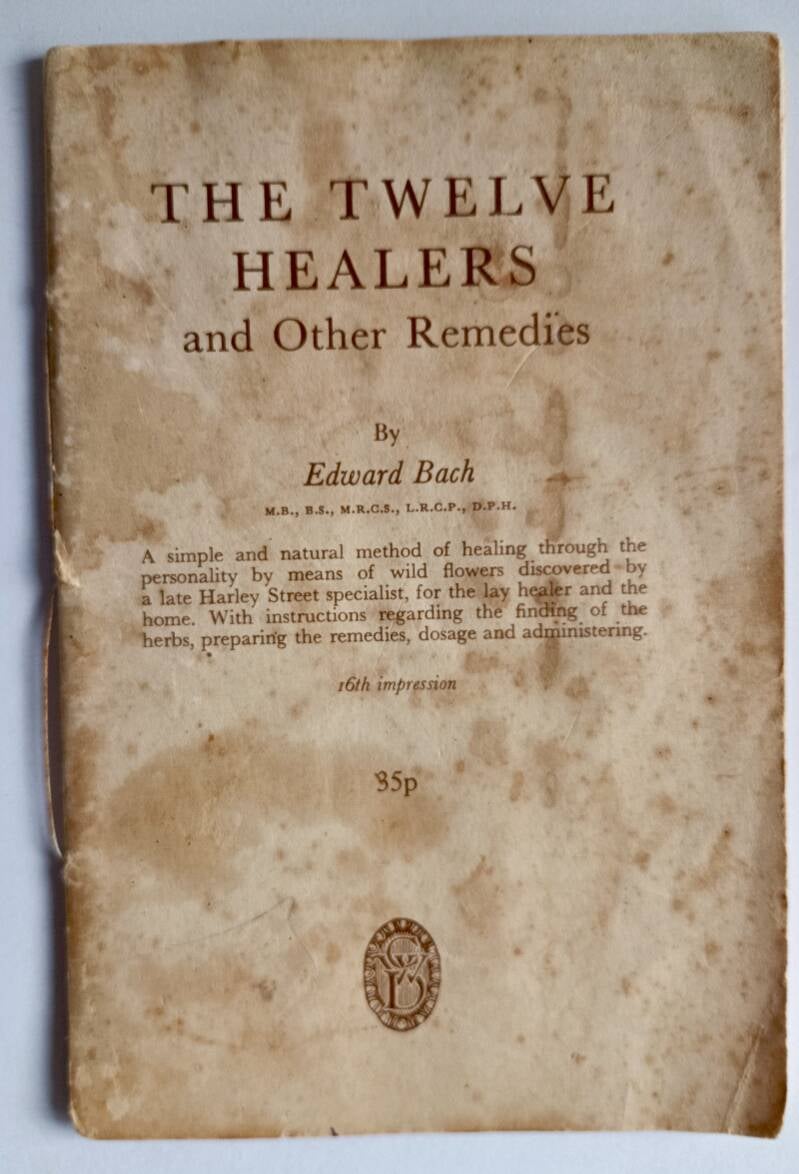
In 1933, he published The Twelve Healers and Other Remedies, outlining his philosophy and the emotional framework behind his remedies. His approach was radical for its time:
- illness was seen as a signal of inner imbalance
- healing was gentle, non-invasive, and self-directed
- the role of the remedy was to support awareness and alignment, not suppress symptoms
Dr Bach also insisted that his remedies remain simple, affordable, and accessible to all, a principle that continues to shape flower essence work today.
Although he died at just 50 years old, Bach’s legacy endures. His work laid the foundation for modern vibrational medicine and directly influenced contemporary systems such as First Light Flower Essences of New Zealand® and the Twin Streams Healing philosophy – both of which honour his core understanding: that true healing arises when emotional truth, energetic coherence, and inner guidance are brought back into alignment.
In this sense, Dr Edward Bach was not only a doctor, but a bridge – between science and spirit, nature and consciousness, and healing as treatment versus healing as remembrance.
Fast forward to 2026, and the most widely recognised flower essence blend is Rescue Remedy® – used daily by millions across the world. Its enduring popularity reflects something deeper than trend or tradition. It points to a collective remembering: that healing does not always need to be forceful, invasive, or complex. Sometimes, it works best through resonance.
Modern flower essence work has evolved from Bach’s original discoveries, expanding in both scope and depth while staying true to the same core principles. At Twin Streams Healing, this lineage is honoured and carried forward through systems such as First Light Flower Essences of New Zealand® – essences created from native plants that hold exceptionally refined vibrational signatures. These essences work not only with emotional states, but with energetic imprints, inherited patterns, and the unique constitutional blueprint of each individual.
In this way, Bach’s work is not something of the past; it is alive and unfolding. Where Bach mapped universal emotional states, contemporary essence work supports the integration of body, mind, emotions, soul, and spirit – meeting the complexities of modern life with the same gentleness, clarity, and respect for natural intelligence.
Flower essences do not impose change. They invite coherence. They remind the system of its original harmony – allowing healing to arise from within.
Skepticism and Lived Experience – When Understanding Shifts into Knowing
Skepticism around flower essences is understandable. Vibrational medicine does not operate in a way that is easily measured by conventional instruments, nor does it fit neatly into a pharmaceutical model of cause and effect. There is no active chemical compound to isolate, no dosage escalation, no immediate, dramatic intervention. For many, this absence of the familiar can raise questions: How can something so subtle create real change?
Yet lived experience tells a different story.
For those who work with flower essences regularly – or who have taken them consistently through periods of emotional challenge, transition, or inner growth – the effects are often quietly unmistakable. Rather than forcing change, essences tend to soften internal resistance. Emotional reactions lose their charge. Old patterns become easier to observe without being reactivated. There is a growing sense of steadiness, clarity, and inner alignment that arises naturally, without effort.
This is where skepticism often gives way to curiosity, and curiosity to direct knowing.
It is commonly observed that clients may begin essence work with uncertainty, yet continue because something shifts. The language used is rarely dramatic. Instead, people say things like, “I’m responding differently,” “That doesn’t hook me anymore,” or “I feel more like myself.” These subtle changes are, in fact, profound. They indicate that the energetic system is reorganising itself around greater coherence.
Modern flower essence systems such as First Light Flower Essences of New Zealand® work with this principle of resonance rather than intervention. Each essence carries a precise vibrational imprint that interacts with the individual’s energetic blueprint – meeting imbalance not as something to be fixed, but as information ready to be resolved. This allows change to occur at the level of consciousness, where lasting transformation begins.
Skepticism belongs to the thinking mind. Lived experience belongs to the body, the emotional field, and the deeper intelligence of the system itself. Flower essences do not ask for belief. They ask only for willingness and consistency. Over time, the results speak not through theory, but through a felt sense of alignment, ease, and wholeness.

In a world that often demands proof before trust, vibrational medicine offers something quieter – and perhaps more radical: an invitation to remember that wisdom is not always something we understand first. Sometimes, it is something we feel.
To find out more – contact us for a FREE 15 minute mini-consultation.
Next week's Blog we will look at Genealogy vs Family History: Two Ways of Understanding the Past
If there is something in this Blog that you would like to know more about, feel free to use the comment section below to suggest future Blog content.
Add comment
Comments